Compute Is Not Procurement

Most institutions still file AI and compute under procurement — a vendor choice, a cloud contract, a capacity buy. It is a category error. Compute has become the ground the economy runs on, and infrastructure is a question of ownership, not of supplier.

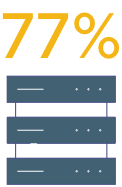
of the world’s data-centre capacity sits in high-income economies — low-income economies host under 0.1%

High-income countries host roughly 77% of global data-centre capacity; low-income economies hold less than 0.1% (World Bank, 2025). If compute were merely something you bought, geography wouldn’t matter. It is this concentrated because it is infrastructure — and infrastructure is owned, not sourced.

THE SIGNAL

Ask most institutions how they are approaching AI and the answer is a procurement answer: which cloud, which vendor, which contract, how much capacity. That instinct is about to cost them, because it mis-files the most important decision of the decade. Compute is no longer a thing you buy. It has become the substrate — the ground that strategy, capital, data and the workforce all now run on — and a substrate is something you own and control, not something you source. The institutions and economies pulling ahead are the ones that have already changed the category. They are not buying more compute. They are authoring the ground beneath everything else. Every era has had such a ground: industrial advantage concentrated around the railways in the nineteenth century and the energy grid in the twentieth, and it is concentrating around compute in the twenty-first — and in each case the question that decided who led was never who used it, but who owned it.

WHY IT MATTERS HERE

The region shows both poles of the lesson in one frame. At one end, the Gulf is authoring the substrate outright: the largest AI compute campus outside the United States is rising in Abu Dhabi, per-capita capacity already exceeds China’s and Germany’s, a sovereign cloud keeps regulated data in-jurisdiction by design, and the region is taking positions in the infrastructure and the frontier alike — a stake in the ground, not a tenancy on it. At the other end stands the cost of the category error: Africa holds under 1% of the world’s compute with 18% of its people, the substrate missing where the population and the future workforce are largest. For every institution in between — a government, a bank, a family enterprise — the same question now sits beneath the strategy, the capital, the resilience and the data: is the ground you depend on something you own, or something you rent until the terms change?

THE SYNARCHY READ

The default institutional posture toward compute is procurement: pick a vendor, sign a cloud contract, buy capacity, renew. It is the same posture used for software — and it is the wrong category entirely.

share of global data-centre capacity by income group, high-income ~77% to low-income under 0.1%, with the Gulf build and Africa’s under-1% flagged. Source: World Bank; IMF, 2025.

Compute stopped being a purchase. It became the substrate — the ground the economy runs on.

And infrastructure is governed by ownership and control, not by supplier choice. The concentration is the tell. If compute were merely something you bought, geography would not matter — you would source it anywhere. It clusters in a handful of economies precisely because it is foundational, scarce and strategically sited, the way grids and ports are: things a country builds and owns, not things it orders by the unit.

There is a reasonable objection: building your own substrate looks like costly duplication when hyperscale capacity can be rented more cheaply. In a stable world that logic held — compute was an input you bought at the best price, like any other. It breaks the moment compute becomes the ground everything else runs on, because you do not rent the floor beneath your own economy and call it efficiency. The cost of ownership is the price of control; the saving on rental is the surrender of it.

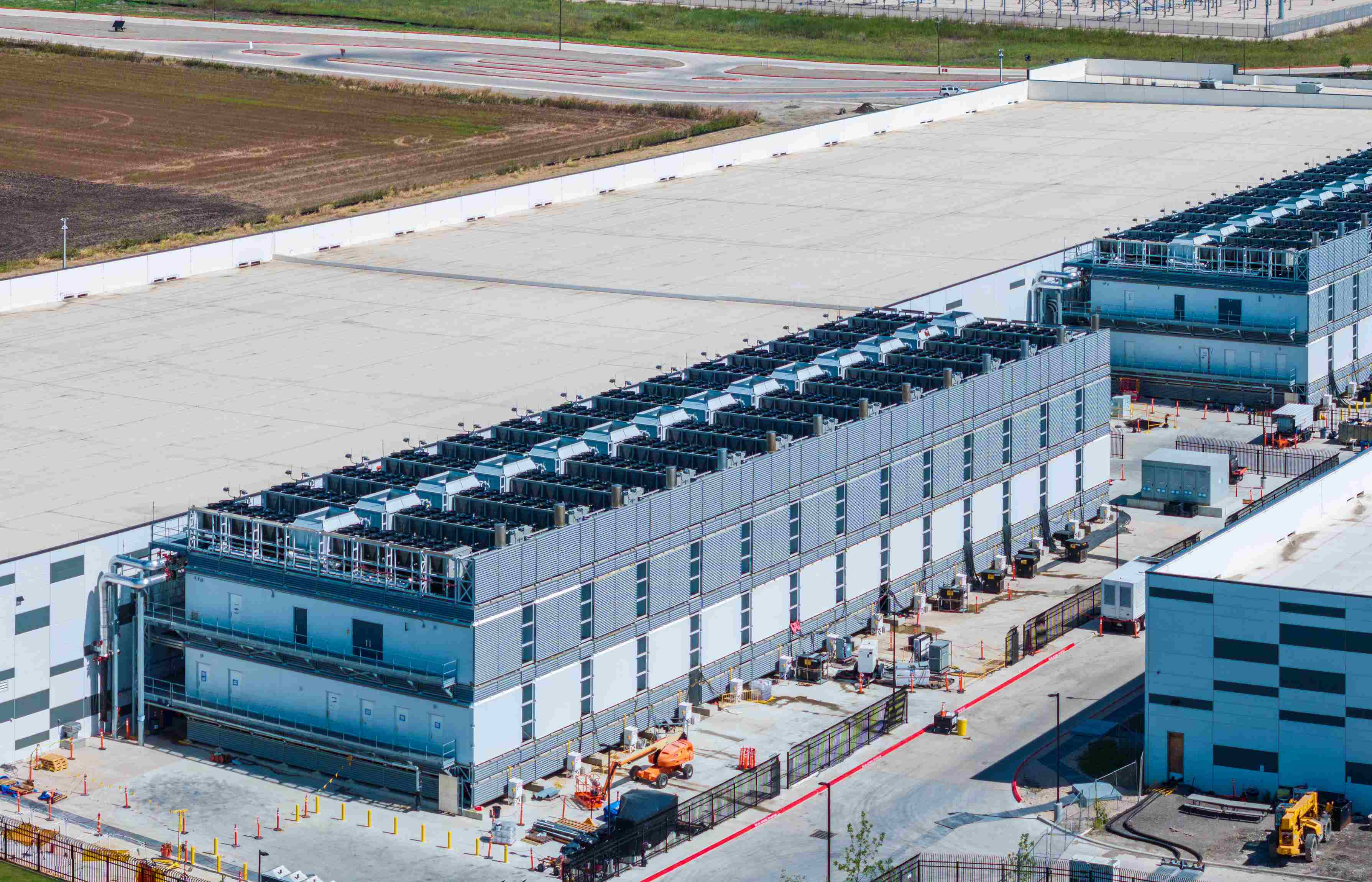
What authoring the substrate looks like is already visible. Singapore built its connectivity and compute base as national infrastructure fitted to its own constraints — scarce land, an entrepôt economy — rather than importing a generic template; the lesson was never the specific design, but that it was authored to the place. The largest AI compute campus outside the United States is rising in Abu Dhabi; per-capita capacity runs ahead of far larger economies; a sovereign cloud keeps regulated data in-jurisdiction by design; and the region is taking positions in the infrastructure and the frontier alike — owning a stake in the ground rather than renting capacity by the contract. That is not a larger procurement. It is a different decision about who controls the floor everything else stands on.

The test that separates the two poles is simple, and it is a test of control, not of price: where does the data live, who governs the model, and does the system still run if the terms change? This is strategic authorship at its most literal — not sourcing the ground, but owning it.

Sovereign compute was never a bigger procurement. It’s a different question — who owns the ground the economy runs on.

THE EVIDENCE

computing power and data infrastructure critical determinant of which country benefits from AI

IMF

Access to compute decides who benefits.

The IMF identifies access to computing power and data infrastructure as a critical determinant of which countries benefit from AI — a structural input to the whole economy, not a line-item purchase. (IMF, via CSIS, 2025)

77%

of global data-centre capacity hosted by high-income countries.

The concentration proves the category.

High-income countries host roughly 77% of global data-centre capacity; low-income economies under 0.1%. If compute were just procurement, geography wouldn’t matter — the concentration is what marks it as infrastructure. (World Bank, 2025)

AI compute campus in Abu Dhabi Ahead of China and Germany

per-capita

The Gulf is authoring the substrate.

The largest AI compute campus outside the US is being built in Abu Dhabi; per-capita capacity runs ahead of China and Germany; a sovereign cloud keeps data in-jurisdiction by design — and the region is taking positions in the infrastructure and the frontier, not renting them. (UAE National AI Strategy 2031; CBUAE; public record)

under 1%

of the world’s compute from Africa

Africa is the mirror.

Africa holds under 1% of the world’s compute while home to 18% of its people — the substrate missing exactly where the population, and the future workforce, are largest. (IMF / CSIS, 2025)

THREE MOVES

01

Re-file compute from procurement to infrastructure.
Govern it the way you govern a grid or a port — ownership, control, multi-decade horizon, strategic siting — not the way you govern a software contract. The question is no longer which vendor; it is what you own. A capacity contract buys you time on someone else’s ground; an infrastructure decision builds your own.

02

Decide what must be sovereign, then build to it.
Name the non-negotiables — data residency, model control, the ability to keep running when terms change — and design the stack to those requirements, rather than accepting whatever a contract provides. The region’s sovereign-cloud-by-design is the template: residency as architecture, not as a clause that can be renegotiated.

03

Take a position in the ground, not a tenancy.
Where it matters, own or co-own the substrate your strategy, capital, resilience and data depend on — fitted to your own energy, geography and industries — rather than renting it indefinitely. Ownership of the ground is the authorship; tenancy is the dependency you discover only when the terms shift.

THE EDGE

Strategy, capital, resilience, data and the workforce all run on the same ground now. The advantage won’t go to whoever buys the most compute — it will go to whoever owns the floor the rest of the economy is built on, before the terms are set by someone else.

Sources: International Monetary Fund (AI and compute access; via CSIS, 2025); World Bank (global data-centre capacity concentration, 2025); UAE Government, National Strategy for Artificial Intelligence 2031; Central Bank of the UAE (sovereign financial cloud, 2026); public-record reporting on the Abu Dhabi AI compute campus.

The Synarchy Edge is Synarchy Consulting’s monthly thought-leadership series on the structural shifts — in strategy, capital, technology, talent and governance — reshaping how institutions across the GCC and Africa compete and endure.

Thank you! Your submission has been received!
Oops! Something went wrong while submitting the form.

Do you want to embark on an inspiring journey that drives growth and impact? Join us to create excellence together